Assistive Software for "Dys"
Projects realized in Laboratory CHart (Human and Artificial Cognition) , in THIM team (Technologies, Disability, Innovation, Multimodality) located in Paris.
CHart, with his observation platform (LUTIN) continously works on assistive technologies for people with sensory impairment or cognitive decline.
Context & Objectives
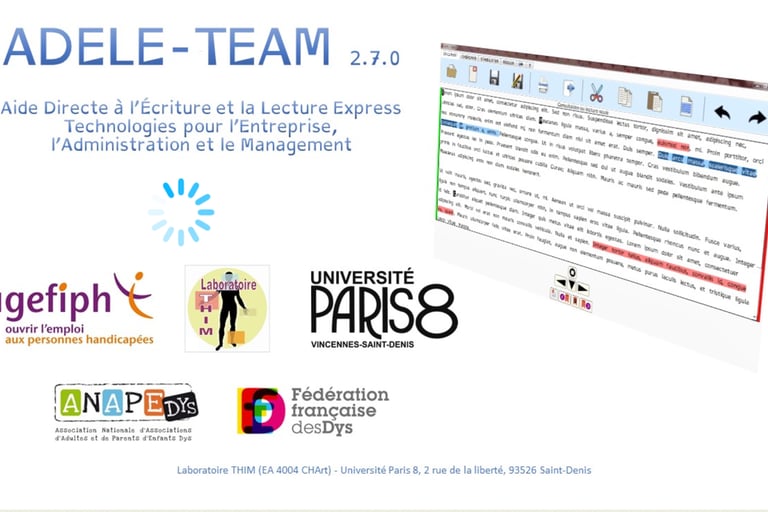
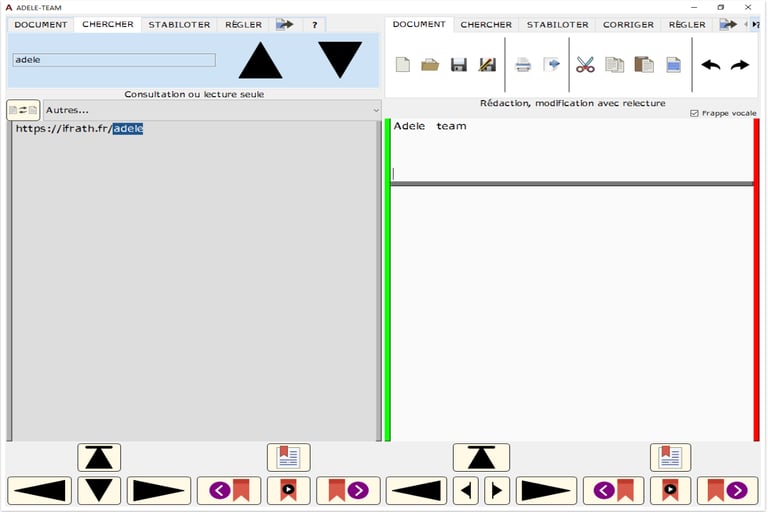
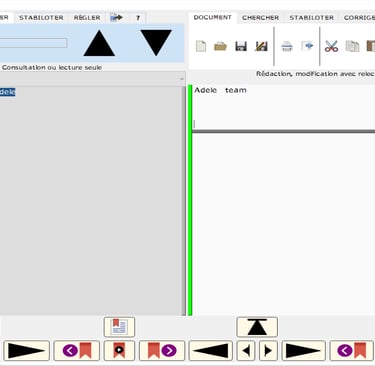
Funded by Agefiph, CHart Laboratory developed ADELE-TEAM, an assistive software designed to support professionals with "Dys" disorders—including dyslexia, dyspraxia, dyscalculia, dysgraphia, and dysorthography—in their daily work.
These disorders often create barriers in reading and writing, leading to cognitive overload and reduced productivity. ADELE-TEAM addresses these challenges through vocal commands, text-to-speech, and cursor-based navigation, enabling users to read and draft documents without relying solely on visual recognition.
Key Research Questions:
How effectively does ADELE-TEAM assist users with dyslexia in reading?
How well does it support writing tasks?
How can the vocal system be made more intuitive?
What cognitive strategies do users with dyslexia develop to compensate for reading difficulties?
My Contributions
As Cognitive Ergonomist, I led the following activities: I conducted a field study on dysfunctions and moderated usability testing with 35 users with dyslexia in Parisian regions. I also transcribed and analyzed audio recordings to identify pain points and opportunities.
Methodology: User-Centered Evaluation
We structured usability testing sessions into three phases:
Reading Tasks (15 minutes): Observed how users interacted with text-to-speech and navigation features.
Drafting Tasks (15 minutes): Evaluated writing assistance and vocal command efficiency.
Interview (30 minutes): Collected qualitative feedback on pain points and suggestions.
Key Findings & Insights
Strengths of ADELE-TEAM: The software’s core strength lies in its vocal system, which users consistently relied on for both reading and drafting tasks. Research confirmed that individuals with dyslexia have well-preserved visuospatial capacities, excelling in visualizing objects and spatial relationships (Bacon & Handley, 2010). We leveraged this strength in our design improvements.
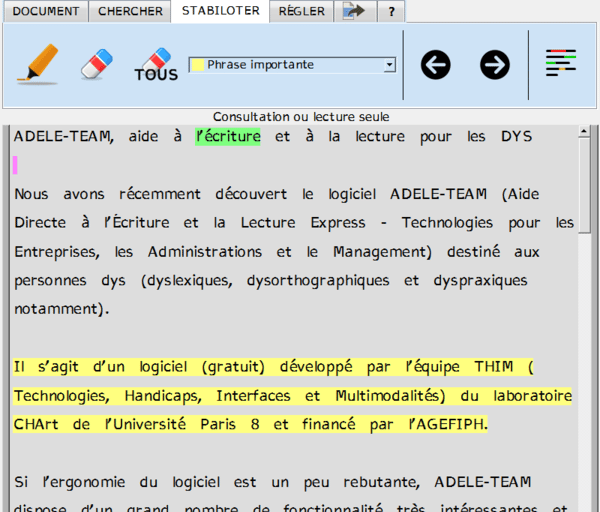
Challenges and Solutions: One of the main challenges was memory overload when working with long texts. Users often struggled to relocate sentences they had read just minutes prior. To address this, we introduced bookmarks, highlights, and a highlighted cursor, which improved navigation efficiency.
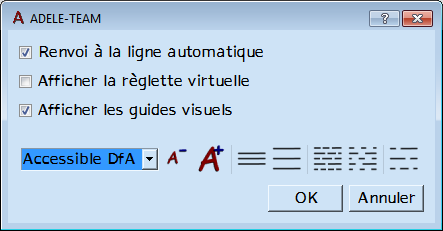
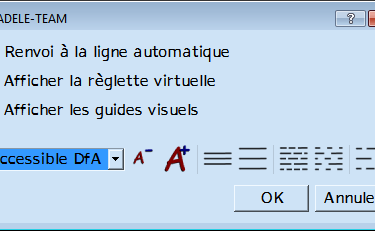
Another issue was alignment difficulties during drafting tasks. Many users needed visual guidance to stay on track. The implementation of a virtual ruler significantly enhanced alignment with vocal prompts.
User Requests and Enhancements: Users requested direct support for DOCx, PPTx, and ODT files, which was implemented based on their feedback. Additionally, the Microsoft Word menu was streamlined into icon-only navigationto simplify the interface and reduce cognitive load.
Impact and Outcomes
Through this study, we identified critical improvements to make ADELE-TEAM more intuitive and effective:
The addition of visual aids such as highlights and bookmarks complemented the vocal system, reducing cognitive load for users. Eighty-five percent of participants reported improved navigation within documents after these features were introduced.
The virtual ruler feature received positive feedback, with users noting a 4.2 out of 5 rating for its usefulness in maintaining alignment during drafting tasks.
Based on user feedback from 22 participants, we implemented direct file support for DOCx, PPTx, and ODT formats, addressing a significant pain point in workflow efficiency.
By balancing the vocal system with visual navigation tools, ADELE-TEAM evolved from a primarily auditory tool to a more integrated system that leverages the strengths of users with dyslexia.
Why This Matters for User Research
This project highlights my ability to:
Conduct rigorous usability testing with diverse user groups, ensuring that design decisions are grounded in real user needs.
Translate cognitive research into actionable design improvements that enhance both usability and user satisfaction.
Balance technical constraints with user-centered solutions, resulting in a more inclusive and effective product.
By focusing on the real-world usability challenges faced by users with dyslexia, I contributed to a tool that empowers professionals in their daily work. This demonstrates how ergonomics and accessibility can drive meaningful change in workplace productivity and inclusion.